Architecture comes first
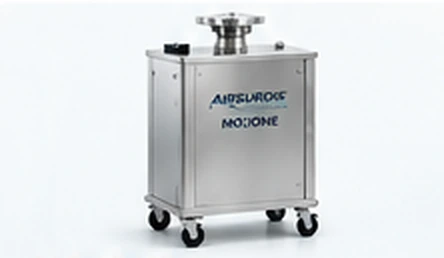
Wall- or ceiling-integrated modules address automation and the absence of movable equipment in the treated zone. Standalone machines offer flexibility across rooms. Ultrasonic systems produce the disinfectant mist by a different mechanism. Their applications may overlap but they are not automatically interchangeable. Any validated process couples a device, chemical and application configuration.
Volume does not describe geometry
Cubic metres provide initial guidance but do not describe obstacles, leakage, absorbing materials or recessed areas. Ceiling height, openings, air exchange and internal compartments can determine distribution. A small but obstructed enclosure may be more demanding than an open room. Cycles must not be transferred between installations without justification.
Control, recording and integration
An integrated system needs a documented interface to the customer’s PLC or HMI, including commands, states, alarms and interlocks. An RJ45 socket does not itself identify the protocol: Ethernet TCP/IP and Modbus TCP are distinct specification details. Standalone equipment also needs appropriate programs, records, safeguards and maintenance.
Select using evidence
Consider the microbiological target, equipment–disinfectant test results, materials, operator safety and site qualification. An online selection tool should produce a reasoned preliminary shortlist, not a certificate of compliance. A technical study then defines installation, cycle parameters and validation strategy.